Tag: nh-senate-2026

  • Be Depressed, for a Minute…

    Be Depressed, for a Minute…

    It’s over.

    Go home.

    The winner of the Democratic Primary, an intelligent man, a sweet man, the kind you want in front of you in the supermarket, the kind you introduce to Mama, the pure-heart who yawned indifferently at genocide, the campaign-finance reformer who spent eleven million dollars to knock New Hampshire voters into Bidenesque submission, is your Democratic candidate.

    The winner of the Republican Primary, a nepotistic, weird-grinning bobble-head, sat quietly during the genocide as well. He then watched his country get dragged into war with Iran while sipping Earl Grey and murmuring about inflation while his party’s leaders had done everything possible to manufacture that very same inflation.

    While having his face massaged with cucumbers and honey to the sound Jessica Fletcher on TV solving a crime from the ’80s (those years when his political ideology was dripped into his ear by his dad’s friends over at MKUltra), he watched his party’s leader attempting to bribe New Hampshire voters with five thousand dollars each if his party wins. And the Republican champion said nothing. With democracy suffocating, he said nothing.

    There are no more political leaders. They have been drummed out of the business by bucket-loads of cash that you can’t even look at without buying a ticket.

    There is a worse candidate here. I am a Democrat and there is a reason. But I won’t tell anyone who to vote for. When the least worse candidate for United States Senate is covered in blood and oil money, I shut the hell up.

    Just clowns.

    The game is over.

    Go home.

    Smoke ’em if you got ’em.

    If you are depressed, that is the appropriate response. Not feeling that way is a sign of either ignorance or apathy. Both of which will send you to the psyche ward when AI kicks in.

    Be depressed for a minute, then start again.

  • America is a Verb

    America is a Verb

    I would like to thank everyone who has either read or shared anything I have said during this campaign. You are the strength of democracy. I hope I have provided some food for thought or changed something for the positive somewhere.

    I would also like to reiterate some of the more important points that I hoped would create some dialogue about our very important future.

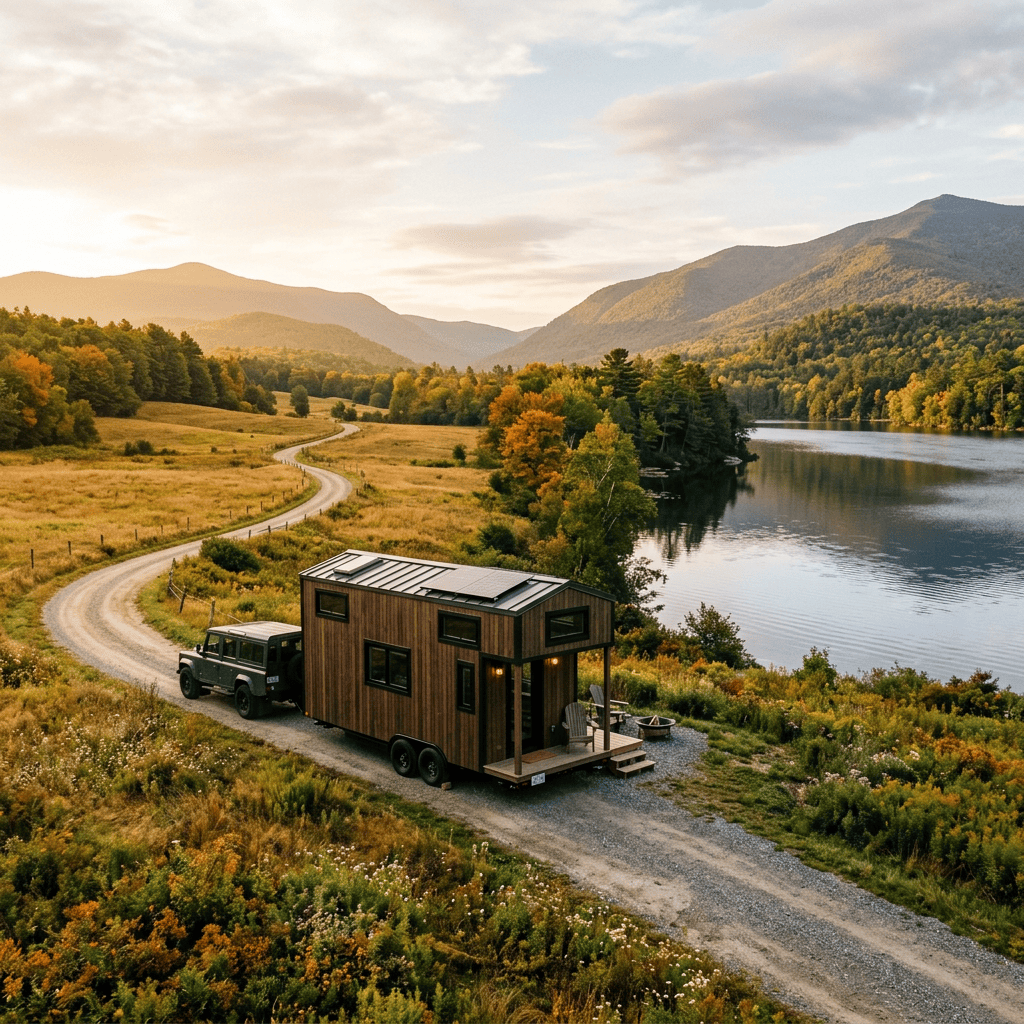
    First, about twenty million people in the United States currently live in mobile or manufactured housing. If that share of the market were to shift over time toward off-grid tiny houses, with people renting space for those homes from other landowners, it could provide stability to the real estate market and stimulus to critical industries.

    Hospitals, farms, supermarkets, and even residential landowners could benefit from hundreds of billions of dollars in rent, helping much of our economy survive in a future low-employment environment.

    Next, I believe healthcare is a right. But it’s not number one by any stretch.

    FOOD. Food is the most important issue facing Americans. The farms that produce the food, the practices they use, the farming techniques, the logistics systems, the marketing, and the dangers of the food industry preying on the American people, all of these are part of our number one priority.

    Quality food is the first priority of a healthy people.

    We can use the power of SNAP to affect real change. We can use financial stimulus by shifting our existing farm subsidies toward regenerative farming initiatives. And we can use a symbiotic relationship between tiny homes and small farms to give regenerative farming a fighting chance.

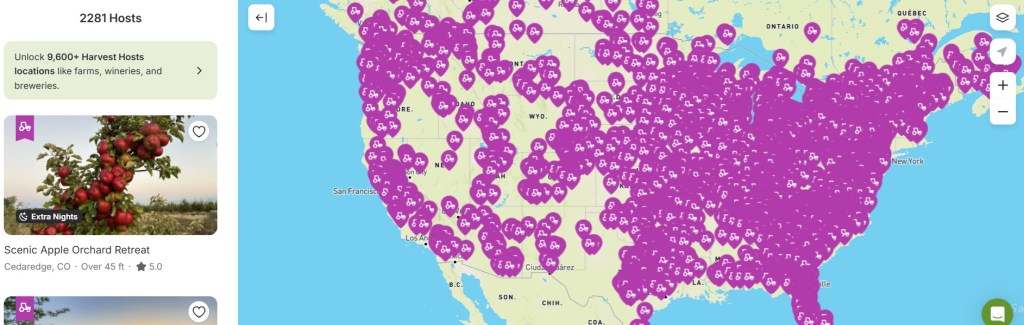
    Evidence of this already working can be found on Harvest Hosts, but it is nowhere near as powerful as it could be if we were to give this kind of initiative public support.

    This image shows all the farms currently hosting tiny houses for short stays. Many of them are restricted from renting for longer stays due to zoning restrictions. They are represented by the purple bubbles:

    Finally, LIFE.

    We need to end the wars. We can become a peaceful people. We can stop letting the powerful prey on the weak. And we can ask ourselves if free and unfettered abortion until the moment of birth is really the hallmark of a free and peaceful people, or if it is the height of cynicism. There are other ways of protecting pregnant women in crisis pregnancies. That is, if we pull away from extremes.

    We can use ideas. We can stop using red and blue to define us. We can get into the mix and hash out our collective mindset without attempting to curbstomp our supposed political enemies.

    Some conservatives have supported LGBTQ rights along the way. Some liberals have supported lower taxes or responsible gun ownership.

    When we stop throwing stones and when we stop predicting Armageddon if the “other side” wins, we get back to the practice of being American.

    America is less a noun than a verb. It’s an action. It’s a way of dealing with fear, with change, and with differences of opinion.

    We aren’t using that verb very much these days.

    These last few months have been fun.

    America is fun when we give it a chance.

    If you want to change the world, hit me up at:

    davejarvisnh@gmail.com

    +1 603 842-3426

  • Dave Jarvis’s Strategy for Winning

    Dave Jarvis’s Strategy for Winning

    I am not stupid.

    I recognize that not having raised money, not putting up signs, not having a huge group of organized followers, and not having official campaign staff can look a lot like I am not actually running a real campaign for Senate.

    But what it looks like and what it actually is are two different things.

    I am running a campaign designed to give me the best chance to win the general election and become the next senator from New Hampshire.

    Being 100% genuine about who I am, my ideals, and what I feel comfortable with as a person serves three purposes.

    First, and most important, I am being true to myself.

    That is how we are supposed to live life anyway.

    I don’t believe anyone can or should serve others if their first task is to become a different person.

    Begging for money is not something I feel comfortable with. Nor is prostituting my ideals for political purposes.

    Second, it is one of the primary tenets of leadership.

    We can’t lead anyone or build any meaningful level of trust when we negotiate with our inner compass.

    To lead, to be a good statesman, and to build trust and hope in others, we need to provide complete and unadulterated transparency.

    Doing so functions like an invitation, a mandate, and a statement of principles to others. People respond to it. And when we are genuine with one another, our interpersonal relationships become much stronger.

    We begin to rebuild trust in society.

    At no cost, I have worked very hard to provide you with the best actionable ideas I can, along with my general outlook on the future, our challenges, and our opportunities. I have been open and honest. I don’t believe I have overpromised.

    And most importantly, I have repeatedly assured you that the future depends on you much more than it will depend on any politician, including me.

    If we can trust each other and promote good ideas, and if we can work together to implement them with the Almighty as our guide, we will unleash the real power of America.

    The American unity and drive that has appeared at difficult moments in history, our powerful Union, recreates the world, turns nightmares into dreams, and gives direction to everyone.

    It’s what we do.

    Third, not having raised money and just being me is a great tactical position.

    Twenty million dollars. Forty million dollars. Whatever the sum, there is not enough money in the world to break a person who hasn’t compromised themselves.

    Currently, I am a fifty-seven-year-old, divorced and single rideshare driver. My sense of humor and love of adventure would love nothing more than John Sununu and the entire Republican establishment using their tens of millions of dollars on trying to destroy my life.

    It’s the life equivalent of a swan dive off a high ocean cliff. I’ll be scared, but I will love every minute of it.

    Either way, for no charge at all, I will continue to say what I think, and I’ll trust in something I believe is primordial in the world of ideas:

    Honesty. Passion. Transparency. They create miracles.

    They resemble nature in that they can take good ideas and multiply them throughout society.

    So yes, I am changing the world right now. I don’t doubt it for a second.

    I am already leading this election.

    I am already changing hearts and minds.

    I am leading you.

    In this difficult moment for our country, I am leading you.

    And I am challenging you to remember who you are.

    I am challenging you to drop the cynicism about the future.

    I am calling you out.

    Be yourself.

    Trust your own judgment.

    Attack the future passionately, with hope and faith in God and yourself.

    And burn the damn bridge behind you.

    There is nothing to go back to.

    Only forward.

  • Our Beautiful Future: The Food System of the Future

    Our Beautiful Future: The Food System of the Future

    AI, if everything goes the way it appears to be going, will create enormous problems for workers. Feeding ourselves could become increasingly complicated as more and more people lose their jobs to technological innovation.

    Right now, only about three percent of what we eat in New Hampshire comes from New Hampshire. Somewhere around ten percent comes from New England. The rest comes through a chaotic national and global logistics network dependent on expensive and critical inputs: electricity, oil, fertilizer, pesticides, commodity prices, labor, real estate and, looming over all of it, corporate economics and profit margins.

    Our food system is not nearly as secure as we imagine.

    We have roughly a one-month supply of food in our supermarkets. That is something we can generally count on.

    We can also count on much of that food being highly processed, loaded with sugar and unhealthy fats, and contributing to obesity, insulin resistance, and chronic disease. Much of the food flowing through this precarious logistics network is making us sick and those illnesses are imposing enormous costs on our healthcare system and our economy.

    We can change this.

    We can change the food system through changes to SNAP. In doing so, we can improve our health, reduce healthcare costs, strengthen our food security, support American farmers, and begin to address an environmental problem we have neglected for far too long.

    The fact that all of these things are connected makes SNAP one of the most powerful social programs we have for preparing America for the future.

    For this to happen, however, we need to use a little of the same magic the food industry has used for decades to get us to consume more of the foods that make us unhealthy.

    We need some salt.

    The metaphorical salt is reforming SNAP.

    SNAP should prioritize staple foods and healthy produce. No trans fats. No sugary drinks. No junk food. We should encourage food that actually nourishes people, preferably produced through regenerative agricultural practices and, whenever possible, grown close to home.

    Obviously, there would be some complaints about those restrictions, but we don’t have a right to get sick on taxpayers’ dollars. And that is exactly what is happening today.

    But we also need some sugar.

    The sugar is investment.

    We should redirect and combine resources from other programs where appropriate and create a much larger healthy-food safety net, one capable of reaching far more Americans if and when large-scale job losses or economic shocks arrive.

    Imagine what could happen.

    A future in which AI eliminates millions of jobs does not necessarily have to become a future of hunger and desperation. We could use that very disruption to build a healthier population, lower per-capita healthcare costs, stronger local food systems, more resilient agriculture, and better stewardship of our environment.

    We could turn a likely future disaster into something else entirely: a beautiful new future for our people.

  • The cost of living is not the problem. It’s a symptom of something bigger.

    The cost of living is not the problem. It’s a symptom of something bigger.

    Today, America is in the early stages of a land grab. The pressures driving it are likely to intensify. There’s no villain behind it. It’s simply the natural consequence of powerful economic and technological forces colliding with institutions that were built for a different era. To adapt, we need more opportunity at a time when money is tight, expenses are high, and hope is low. For that, we need to remember our origins and the way mobility became upward mobility.

    Our story began with desperation and movement, from point A to point B, on boats from Europe. Once they arrived, by any means available, they scattered in different directions to pursue opportunities. Later, industrial jobs moved to the cities, and people moved with them as if sucked in by gravity. After centuries of migration, roughly 80 percent of Americans (about 270 million people) now live in urban regions. In time, technological innovation made much of life available online. Ironically, that same innovation has weakened the careers that drew us into cities, making urban life increasingly redundant. If the force pulling people to urban areas switches polarity, it’s a problem.

    We caught a glimpse of the dangers of that when a very small percentage of people left large cities for quieter communities during COVID. Some moved to New Hampshire and did well investing in real estate, and the cost of living in our state rose dramatically. It still hasn’t returned to pre-pandemic levels. If only ten percent of today’s urban population eventually decided to relocate in the event of a future tech related jobs crisis, that would represent roughly 27 million people, and the consequences are difficult to imagine.

    So, I believe the financial stress you are feeling today is not the real problem. I think it’s a symptom and a warning of a much, much bigger emerging issue. And that’s a big reason why I am running for the Senate, to help protect you from it.

    We call it housing costs here in New Hampshire, and most politicians are advocating for more development. They advocate more traditional housing, or perhaps manufactured homes as a response. First, more conventional housing is expensive and doesn’t approach the scale of the problem. It can only reduce costs if migration stops, and it isn’t stopping. Manufactured homes and mobile home parks might help a bit if they weren’t becoming traps. Investors are increasingly preying on mobile-home owners, jacking up prices, and confiscating the homes of those who can’t pay. Evidence of this is emerging across the country.

    The answer is not about changing everything. It’s about creating a diversity of housing options, especially embracing those that offer greater mobility. If America is about to become a giant snow globe, we can influence how the snow settles.

    I believe homes on wheels are the newest chapter in American mobility. They are affordable. They move in any direction. They seek opportunity more freely and create balance more quickly.

    For the right people, a surf-bum Airstream parked near the beach becomes a startlingly intelligent lifestyle choice, fitting for a society about to surf a giant wave. We need fun. We need freedom. And mobility distributes economic activity equitably. That enriches our society for little added financial investment.

    I envision homes inspired by mobile living, tiny houses, and travel trailers. I imagine them engineered for four-season living, solar-powered, with high-tech power systems, high-speed internet, and a national plot-rental infrastructure as ubiquitous as today’s rideshare apps. I see a world where landowners, farmers, business owners, and homeowners with extra space and a need for additional income rent to off-grid tenants. I see lower costs, new kinds of financing, government participation and leadership, and our society, at all levels, being supportive of and cognizant of both its benefits and the stakes of failure.

    In responding to the danger of widespread demographic shifts and a potential technology-fueled recession, housing is the most obvious issue. But I can’t let the moment pass without mentioning a concern that could affect our health, our ability to adapt, and even create political and economic extremes very quickly: challenges to our food system.

    We produce only a small percentage of our food locally and are completely dependent on logistics networks, corporate interests, oil prices, and a host of other factors to provide the rest. With the danger of economic shock, we shouldn’t be satisfied until we are prepared to provide every American with healthy food, even in times of instability. Our people, knowing they will eat, will have the confidence they need to create solutions.

    Current agricultural subsidies (big checks handed out primarily to our nation’s wealthiest corporate farms) should be applied to our food program as added demand-side food subsidies, thereby reaching all farmers, regardless of size. The food program should become a reinvented mission that values more than just daily calorie intake. The dignity of the human person, our soil, our environmental infrastructure, and the quality of our food are far too important. We can no longer subsidize Type 2 diabetes and obesity. The program should provide only healthy foods, staples, and fresh produce.

    So, food and shelter. These are our most critical issues looking to the future. Some would call them “poor people problems.” So let’s take a second and be honest. Until they are resolved, are we poor people? Not as individuals but as a nation? Forget about our individual finances, our powerful military, our vast streaming content, our education levels, our incredible life stories, our brand-new shoes, or our new golf clubs. Until we strengthen housing and food with enough resilience to address our coming instability, are we vulnerable to real poverty?

    The beauty of the question is that we can start doing what poverty eventually teaches us. We can mind our own business. We can judge less, forgive more, and turn to God with honesty and humility. We can care less about what some narcissistic politician says or thinks and focus completely on resolving our important problems. Most significantly, we can recognize that our future depends on us working together.

    As the next Senator from New Hampshire, I will fight to reduce housing costs and to ensure that any economic or demographic challenge will end up cushioned by a system ready to absorb shocks and convert them to opportunities.

    I will work to strengthen our food system to prepare our society for any future instability.

    I will fight for farmers in New Hampshire and throughout the country to give them every possible advantage.

    I will work with anyone to tone down the rhetoric, build friendships at all levels and in all ideologies, and allow the egoism in our national politics the isolation it deserves. I have vast experience working on projects across the globe where interpersonal problems have arisen among people of different languages, cultures, and personality types. I won’t let my ego or my personal beliefs affect my ability to find commonality. I will win that battle. I always have.

    I can visualize success. I can see our younger generation, currently overwhelmed with stress about their future, finally relaxing and following their passions without concern over finances. I can see them in a new America, feeling free to live as they choose and providing immeasurable benefit to their society in doing so.

    But I see another reality. I see our leaders unable to change, blaming it all on one group or another, never paying due attention to freedom on the emergency room table, bleeding out.

    We can’t live without feeling free. Without it, we shrink. We revert to extremes. We start to hate. Creativity dies. Confidence dies. We join cultish factions and call them freedom. Then we fight over resources and call them finite when they are anything but.

    We give up the dream of those who came before us. We lose the fight. We fail ourselves, our children, God, and history.

    We die when all we needed was to live free.

    Let’s work together, choose wisely, and start dreaming again.
  • To the Twenty Percent of Democratic Party Voters for Senate Who Still Remain Undecided…

    To the Twenty Percent of Democratic Party Voters for Senate Who Still Remain Undecided…

    We need humor these days. Don’t judge me.

    To you, the twenty percent of Democratic voters who are not only undecided but whose numbers are growing…

    You are a Democratic Party voter. You have been barraged with ads, news, lawn signs, and political drama. Your “front-runner” in the Senate race, who has spent the last twenty years in politics and is currently a member of the United States Congress, has made less than fifty percent of Democratic voters excited about his Senate campaign. All of that while spending a mint to convince you, and begging you for more money, a lot more money.

    Gaza burned, his donors pulled us into a global war, and with that, his star began its descent. It’s karma. He’ll be out of the penalty box next election.

    His “close second” is an intelligent and passionate person whose lack of awareness of economics concerns you. It concerns me too.

    Socialism is rising, and it’s scaring the kids.

    A vote for me is not wasted. If I win you over, and maybe five percent of undeclared voters, I win.

    Can I win the general election? I don’t know. Can you? Take responsibility for yourselves. You are the ones who win or lose. I am just a guy applying for a job.

    I am sensible. I will make sure that, through the coming storm, you will all eat, are safe, and that you remain free. Most importantly, I will help break down the walls that divide our country. I will help us avoid a slow drift into partisan violence.

    My common sense, friendliness, and my sense of humor will help me, and you, a great deal.

    Think about it.

  • Just Vote Dammit

    Just Vote Dammit

    America has lost confidence over the years.

    You have lost confidence.

    That is something I have learned over the past few months of trying to run a campaign for Senate while remaining true to myself and to my soul. I have learned that Americans are much slower to trust their own judgment than they used to be. And if they had that confidence in themselves, they wouldn’t be looking to politicians to resolve all of their problems.

    Americans invented off-grid living. Americans invented the tiny house. But somehow we lack the confidence in ourselves to take these ideas and turn them into what they could become: a true social revolution that could bring extremely affordable options and the promise of a better life to so many of us who have been broken over the years.

    We lack confidence in our votes. We become cynical at the idea that the hopes we express through our votes will have any real effect at the polls.

    And we do this while a tiny fraction of our population run roughshod over the American people and their dreams.

    I don’t mind that Karishma Manzur considers herself a Socialist. I become concerned when I hear words that suggest she may not fully understand economics or the moment our nation is in.

    I don’t mind Chris Pappas’s openly gay relationship at all. I mind him sitting by and watching silently while his political donors attempt to exterminate another population.

    I believe I am the best qualified candidate for this particular moment, not because I am generally the most qualified person in New Hampshire, but because I put my name on the ballot.

    I have a good mind. I have good judgment. I understand history, economics, and technology. I believe those things matter enormously right now. Most importantly, I am willing to like and dialogue with anyone, anywhere, any time.

    I am not rich. I don’t particularly want to be rich.

    I am not a very good campaigner. I admit that.

    I don’t want to beg for money. It makes me feel sick. And watching others turn the democratic process in New Hampshire into a game of high-stakes poker enrages me.

    I believe in ideas.

    My website is filling up with good ideas. I am doing my job.

    If the democratic process in New Hampshire were a little more pure, and if the habit of reading hadn’t fallen out of favor, I believe that would be obvious.

    If you think allowing abortion until birth is a good idea, and you are willing to set our country on a collision course with the religious right, don’t vote for me.

    But if you believe we can put reasonable restrictions on late-term abortion, value human life, and take abortion away from political opportunists like Donald Trump, please consider this:

    It is not that difficult.

    Just vote.

    A truly beautiful future awaits us. But it only belongs to those who believe in themselves and who believe in democracy itself.

    If you have given up on democracy, if you have given up on your own vote, if you have given up on the belief that you have the ability to dictate your own future, the conversation ends.

    And we go primal.

    We have always had violence as a second option. And there are many people chomping at the bit for that moment to return.

    You can feel it in the air.

    Either way, I have already won this election. I learned to believe in myself again, after a long hiatus. I lost weight. I got all those worries about our country out of my subconscious and into the public eye. And my soul feels lighter, much happier.

    But I worry about you. And I pray for you.

    America, you have become far too cynical.

    And make no mistake: Cynicism is death, one way or another.

    So just vote your heart.

    Vote your mind.

    Vote, dammit.

    Be the dream our country was founded on.

  • Our Beautiful Future: Tiny Houses

    The first automobile was created in the mid-1880s. For two and a half decades, human beings were aware of them. We thought they were quaint, interesting, a curiosity. But we preferred horses. We spent a quarter century walking through horseshit before the idea of the automobile finally started to take hold.

    It was the leadership of Henry Ford that took the world somewhere new. The automobile revolutionized life itself and dramatically transformed the economy. Speed and range of movement became principles of modern society, driving our world to new heights.

    For the last twenty-five years, the ingenuity of everyday Americans dissatisfied with the cost of housing has driven Tiny House design to amazing levels. We all scroll through pictures of them when we feel hopeless, allowing ourselves moments of inspiration and dreams of something different. We see and feel their potential, but we wait at the gates for the idea to manure. Excuse me, I meant to say “for the idea to mature.”

    My opponents in the Senate primary are suggesting breaking ground on millions of new homes to resolve the current housing affordability problem. They show little concern for the environmental consequences. They don’t dive very deeply into the cost of construction and, therefore, the cost of that new housing. And they never touch on the real potential size of the problem.

    It could reach into the tens of millions.

    They want to pave paradise and put up a parking lot.

    Tiny Houses are the kind of technology that, if they were readily available today, if financing were available, and if government simply got out of the way by changing zoning laws to support them, could explode faster than traditional construction ever could. Thus, reducing housing costs much faster.

    And if Tiny Houses were within reach of the average person, the way the Model T eventually became, they could immediately provide hope, inspiration, and the possibility of a different life to an expanding part of our population, people who currently see very little hope and act accordingly.

    Thoughts of Tiny Houses elicit dreams of the ocean, the lakes, the rivers, the mountains, the desert, the heartland. Open skies. Gazing at the stars. Freedom of movement. Travel. Financial manageability.

    And then all the other dreams that people stuff down inside themselves when they spend their whole lives trying to pay a rent bill. The music, the art, the hobbies, the passions.

    Tiny Houses change the way the mind works.

    They very quickly and effectively put a new American Dream back into our heads. They give direction to the soul: exploration, adventure, and fun.

    It’s my dream, whether I win this race or not. Whether I win a billion dollars in the Powerball or not.

    I want the open sky.

    I want the beach.

    I want all of America.

    I want the potential of anywhere, at any time.

    And I want to look at the stars again, knowing I am free.

    If today’s Tiny House is the Model T, I can’t wait for the future.

    I am excited about where the designs will go. And I dream about my sons, and their children, and their children, living lives of adventure and discovery in this world.

    The fruit is ripe.

    It’s easy to pick.

    The moment is now.

  • LGBTQ

    New Hampshire was the first state in the nation to embrace marriage equality through the legislative process rather than through the courts. And because of the role of New Hampshire’s first-in-the-nation primary, and the political clout that comes with it, the law helped force a reevaluation of the issue within the American political system. It was a game changer.

    The passage of same-sex marriage in New Hampshire didn’t happen exclusively because of the LGBTQ lobby. At the time, they didn’t have much political power. The Democratic Party didn’t support it. The left, the Clintons, the Obamas, and the political establishment largely looked the other way and warned the LGBTQ community of overreach.

    It passed because people of all flavors believed in fairness. And it was pushed over the top because some conservatives in New Hampshire responded to appeals for equality under the law. I know this because I was part of those appeals.

    I did it by writing articles, submitting them to news organizations, and sending letters to politicians. According to Jim Splaine (the sponsor of the legislation), I had an effect on the law’s passage. Considering the small margin by which it passed, I feel privileged to have been a part of it. And I was honored when Jim invited me to the State House for a coffee after its successful passage.

    I am straight. I never had any doubt about my own sexuality. While I’m an Irish Catholic and I try to take my faith seriously, I never doubted what my conscience told me. I had family members whose lives would have turned out very differently if they had been treated with the dignity I believe was due to them. And I understood that while I didn’t understand everyone’s sexuality, I needed to mind my own business and invite others to do the same.

    I am a big fan of people minding their own business.

    But I was there, in that moment, either changing minds or inviting those whose minds wouldn’t change to understand the futility of blocking the rights of others. And when it passed, I had the privilege of seeing a New Hampshire legislator filmed on WMUR saying that he had changed his vote at the last minute because of an email he had received.

    Then he began reading words that seemed remarkably familiar to me. I never went back to check, but I am pretty sure they were my words.

    Since then, other issues have arisen within the LGBTQ community. I don’t have all the answers. Those answers may not be found in government but in the day-to-day struggle of the LGBTQ community.

    Some solutions can be signed with a pen. Some require a Jackie Robinson to endure the pain and suffering of being first, to change the world simply by refusing to give up.

    I continue to cheer for the underdog.

  • Election Math for Pollsters: Undeclared Voters, Welcome to the Dave Party!

    So, the fix is in.

    Chris Pappas is destined to win the New Hampshire Democratic primary for U.S. Senate. They’re saying he’ll win 59% of the vote. That’s enough. He wins. Everybody go home.

    Nothing else to see here.

    What that means is that he is destined to win 59% of the Democratic vote, or about 16% of registered voters.

    The Republican Party currently makes up 33% of New Hampshire voters, and John Sununu is expected to win his primary handily, with 54% of Republicans, or about 18% of the voting public.

    So, our two front-runners are spending a combined $27 million, some of it from foreign nations pulling us into world war three and some from other murky organizations, to win their respective primaries, with a combined total of about 34% of the potential voting public behind them.

    That means 66% of New Hampshire voters would not prefer either of them, based on those numbers.

    Undeclared voters make up 39% of New Hampshire’s voters. That’s more than the combined share represented by Pappas and Sununu in these calculations.

    Their only problem is that they don’t seem to know how powerful they are.

    I think both parties need a spanking, and undeclared voters are just the people to do it. I don’t want to be a backseat parent, but you might consider striking your child. Feel free to start with the Democrat. I’ll look the other way.

    I won’t pressure all you undeclared voters to vote for me. Use your best judgment.

    Just understand the power you have to influence our political system.

    And good luck to you. God Bless.