Today, America is in the early stages of a land grab. The pressures driving it are likely to intensify. There’s no villain behind it. It’s simply the natural consequence of powerful economic and technological forces colliding with institutions that were built for a different era. To adapt, we need more opportunity at a time when money is tight, expenses are high, and hope is low. For that, we need to remember our origins and the way mobility became upward mobility.
Our story began with desperation and movement, from point A to point B, on boats from Europe. Once they arrived, by any means available, they scattered in different directions to pursue opportunities. Later, industrial jobs moved to the cities, and people moved with them as if sucked in by gravity. After centuries of migration, roughly 80 percent of Americans (about 270 million people) now live in urban regions. In time, technological innovation made much of life available online. Ironically, that same innovation has weakened the careers that drew us into cities, making urban life increasingly redundant. If the force pulling people to urban areas switches polarity, it’s a problem.
We caught a glimpse of the dangers of that when a very small percentage of people left large cities for quieter communities during COVID. Some moved to New Hampshire and did well investing in real estate, and the cost of living in our state rose dramatically. It still hasn’t returned to pre-pandemic levels. If only ten percent of today’s urban population eventually decided to relocate in the event of a future tech related jobs crisis, that would represent roughly 27 million people, and the consequences are difficult to imagine.
So, I believe the financial stress you are feeling today is not the real problem. I think it’s a symptom and a warning of a much, much bigger emerging issue. And that’s a big reason why I am running for the Senate, to help protect you from it.
We call it housing costs here in New Hampshire, and most politicians are advocating for more development. They advocate more traditional housing, or perhaps manufactured homes as a response. First, more conventional housing is expensive and doesn’t approach the scale of the problem. It can only reduce costs if migration stops, and it isn’t stopping. Manufactured homes and mobile home parks might help a bit if they weren’t becoming traps. Investors are increasingly preying on mobile-home owners, jacking up prices, and confiscating the homes of those who can’t pay. Evidence of this is emerging across the country.
The answer is not about changing everything. It’s about creating a diversity of housing options, especially embracing those that offer greater mobility. If America is about to become a giant snow globe, we can influence how the snow settles.
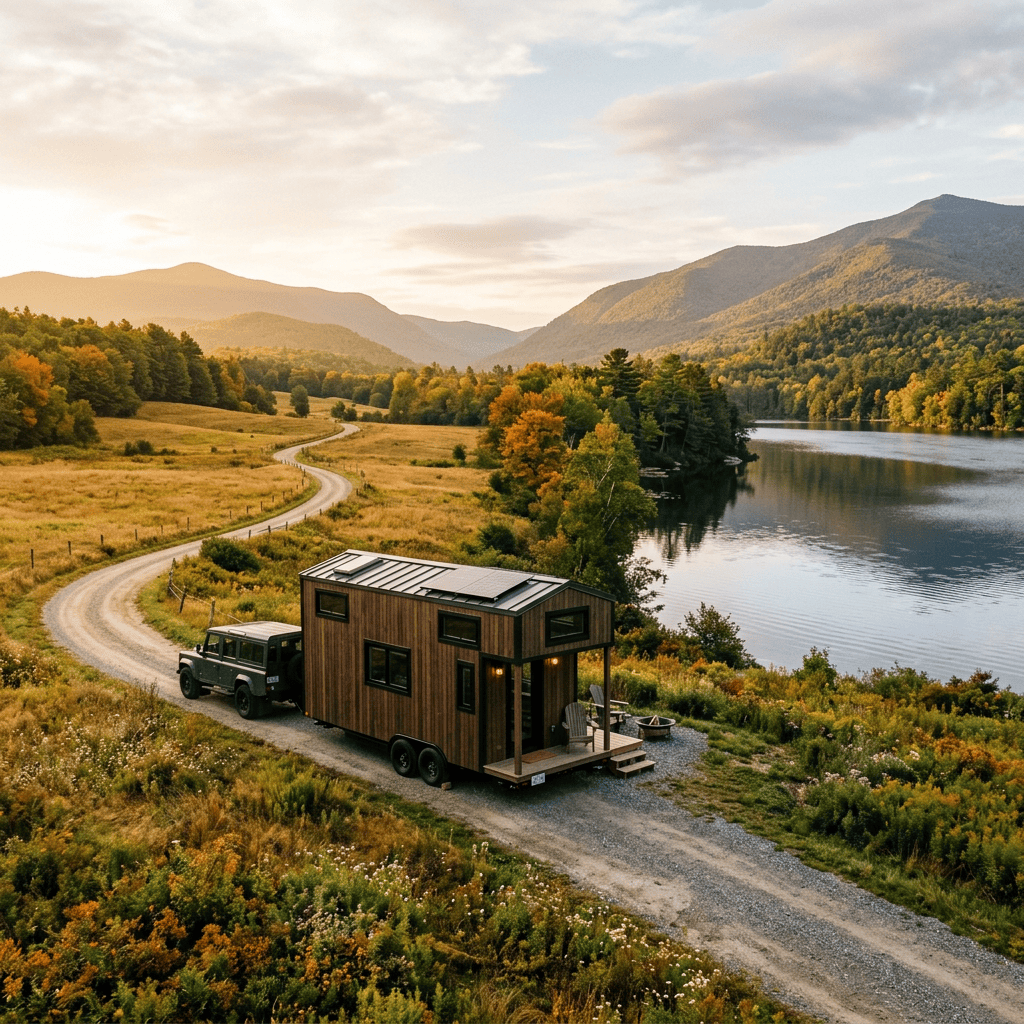
I believe homes on wheels are the newest chapter in American mobility. They are affordable. They move in any direction. They seek opportunity more freely and create balance more quickly.
For the right people, a surf-bum Airstream parked near the beach becomes a startlingly intelligent lifestyle choice, fitting for a society about to surf a giant wave. We need fun. We need freedom. And mobility distributes economic activity equitably. That enriches our society for little added financial investment.
I envision homes inspired by mobile living, tiny houses, and travel trailers. I imagine them engineered for four-season living, solar-powered, with high-tech power systems, high-speed internet, and a national plot-rental infrastructure as ubiquitous as today’s rideshare apps. I see a world where landowners, farmers, business owners, and homeowners with extra space and a need for additional income rent to off-grid tenants. I see lower costs, new kinds of financing, government participation and leadership, and our society, at all levels, being supportive of and cognizant of both its benefits and the stakes of failure.
In responding to the danger of widespread demographic shifts and a potential technology-fueled recession, housing is the most obvious issue. But I can’t let the moment pass without mentioning a concern that could affect our health, our ability to adapt, and even create political and economic extremes very quickly: challenges to our food system.
We produce only a small percentage of our food locally and are completely dependent on logistics networks, corporate interests, oil prices, and a host of other factors to provide the rest. With the danger of economic shock, we shouldn’t be satisfied until we are prepared to provide every American with healthy food, even in times of instability. Our people, knowing they will eat, will have the confidence they need to create solutions.
Current agricultural subsidies (big checks handed out primarily to our nation’s wealthiest corporate farms) should be applied to our food program as added demand-side food subsidies, thereby reaching all farmers, regardless of size. The food program should become a reinvented mission that values more than just daily calorie intake. The dignity of the human person, our soil, our environmental infrastructure, and the quality of our food are far too important. We can no longer subsidize Type 2 diabetes and obesity. The program should provide only healthy foods, staples, and fresh produce.
So, food and shelter. These are our most critical issues looking to the future. Some would call them “poor people problems.” So let’s take a second and be honest. Until they are resolved, are we poor people? Not as individuals but as a nation? Forget about our individual finances, our powerful military, our vast streaming content, our education levels, our incredible life stories, our brand-new shoes, or our new golf clubs. Until we strengthen housing and food with enough resilience to address our coming instability, are we vulnerable to real poverty?
The beauty of the question is that we can start doing what poverty eventually teaches us. We can mind our own business. We can judge less, forgive more, and turn to God with honesty and humility. We can care less about what some narcissistic politician says or thinks and focus completely on resolving our important problems. Most significantly, we can recognize that our future depends on us working together.
As the next Senator from New Hampshire, I will fight to reduce housing costs and to ensure that any economic or demographic challenge will end up cushioned by a system ready to absorb shocks and convert them to opportunities.
I will work to strengthen our food system to prepare our society for any future instability.
I will fight for farmers in New Hampshire and throughout the country to give them every possible advantage.
I will work with anyone to tone down the rhetoric, build friendships at all levels and in all ideologies, and allow the egoism in our national politics the isolation it deserves. I have vast experience working on projects across the globe where interpersonal problems have arisen among people of different languages, cultures, and personality types. I won’t let my ego or my personal beliefs affect my ability to find commonality. I will win that battle. I always have.
I can visualize success. I can see our younger generation, currently overwhelmed with stress about their future, finally relaxing and following their passions without concern over finances. I can see them in a new America, feeling free to live as they choose and providing immeasurable benefit to their society in doing so.
But I see another reality. I see our leaders unable to change, blaming it all on one group or another, never paying due attention to freedom on the emergency room table, bleeding out.
We can’t live without feeling free. Without it, we shrink. We revert to extremes. We start to hate. Creativity dies. Confidence dies. We join cultish factions and call them freedom. Then we fight over resources and call them finite when they are anything but.
We give up the dream of those who came before us. We lose the fight. We fail ourselves, our children, God, and history.
We die when all we needed was to live free.
Let’s work together, choose wisely, and start dreaming again.

